Green Tourism Challenges Vector: An Embroidery Review
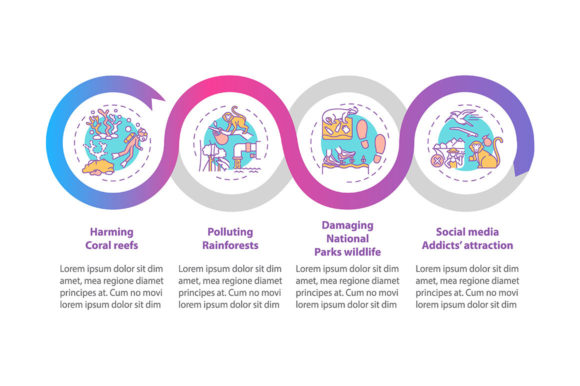
As a professional embroidery designer and product reviewer, I approach every new graphic asset with a specific question: will this actually stitch out well on fabric? When I first opened the Green Tourism Challenges Vector, I wasn't just looking at a digital infographic template; I was mentally converting those linear icons and workflow layouts into satin stitches, running stitches, and fill areas. This design focuses on damaging national parks, wildlife environments, and data visualization across four distinct steps. While it is marketed as a vector graphic template for print, its structured layout makes it a fascinating candidate for educational embroidery projects, eco-conscious branding, and awareness campaigns.
Translating Infographic Data to Stitch
The immediate strength of the Green Tourism Challenges Vector lies in its clarity. As an embroidery file source, complex gradients and shading are often the enemy of a clean stitch-out. This design avoids that pitfall by utilizing a process timeline chart with linear icons. For an embroidery digitizer or a crafter modifying vectors for machine use, this simplicity is gold. The four-step workflow layout provides natural breaks in the design, allowing you to isolate specific sections for smaller hoop sizes or combine them for a larger narrative piece.
When evaluating this for real-world application, the mood is serious yet organized. It doesn't feel like a whimsical holiday embroidery or a nursery decoration. Instead, it carries the weight of environmental advocacy. The visual personality is educational and urgent. If you are creating custom apparel for a park ranger program, an eco-tourism guide service, or a sustainability workshop, this aesthetic aligns perfectly. However, because it deals with "damaging" themes, the color palette selection during digitization becomes critical. You must balance the gravity of the message with the tactile warmth of thread to ensure the finished product remains engaging rather than purely depressing.
Real-World Application: The Eco-Tote Project
To truly test the viability of this graphic template, I envisioned a specific project: a heavy-duty canvas tote bag designed for a national park volunteer group. Tote bags are a staple for any Etsy seller or small shop product line focused on sustainability. The challenge with tote bag embroidery is often the fabric texture and the need for durability.
In this scenario, the Green Tourism Challenges Vector serves as the central educational element on the back of the bag, while a simplified logo sits on the front pocket. Because the original asset is a vector, scaling it down to fit a 5x7 hoop requires careful attention to detail. The linear icons in the workflow layout translate beautifully to running stitches or narrow satin columns. However, the text elements within the data visualization require scrutiny. In my experience, infographic text is often too small for standard machine embroidery. For this tote bag project, I would recommend simplifying the four steps into keywords or short phrases rather than full sentences. This ensures legibility from a distance and prevents the stitch density from becoming too high, which can cause puckering on canvas.
The result is a handmade product that functions as both a utility item and an educational tool. Customers at craft fairs or boutique shops appreciate merchandise that tells a story. By using this design, you aren't just selling a bag; you are selling awareness. This elevates the perceived value of the item and builds trust with buyers who care about commercial embroidery that supports a cause.
Navigating Fabric and Stabilizer Choices
While the Green Tourism Challenges Vector is versatile, it demands respect regarding substrate selection. This is not a design for stretchy jersey knits or delicate baby clothes unless significantly modified. The linear nature of the icons and the potential density of the timeline chart require a stable foundation.
- Canvas and Denim: Ideal for maintaining the crisp lines of the workflow layout. Use a medium-weight cutaway stabilizer to prevent distortion during the stitching of the four-step process.
- Twill and Drill: Excellent for embroidered patches or caps. The slight texture of twill adds depth to the fill stitches without obscuring the linear details.
- Avoid Thin Knits: Unless you are using a heavy tear-away or wash-away topping, the detailed corners of the infographic may pull the fabric. If you must use a t-shirt, consider placing the design on the back yoke where there is less stretch.
For dark fabrics, contrast is non-negotiable. The original vector might rely on subtle color shifts to denote different stages of environmental damage. In embroidery, you must rely on thread colors. Test your palette on scrap fabric first. A neon green against black might vibrate visually, making the data hard to read. Muted earth tones or high-contrast whites often work better for conveying serious environmental data in thread form.
Commercial Viability and Digital Assets
For creative entrepreneurs and digital product sellers, this graphic template offers dual utility. Beyond the physical embroidered patch or sweatshirt embroidery, the vector itself is a valuable design asset for printable mockups. Before committing to stitching, you can create professional listings for your Etsy shop using the clean vector art. Once orders come in, you have a validated design ready for production.
However, a crucial note for all small business owners: always verify the licensing terms included in the ZIP file. Just because a graphic is available as a template does not automatically grant permission to sell finished embroidered products or redistribute the digitized embroidery file. Confirm whether the license covers commercial embroidery, personalized gifts, and digital resale. Protecting your craft business starts with respecting intellectual property.
Designer Notes for Successful Execution
If you decide to bring the Green Tourism Challenges Vector into your embroidery studio, keep these practical tips in mind to ensure a professional finish:
- Simplify Text: Infographics are dense. Reduce word counts significantly before digitizing. If the original has paragraphs, convert them to bullet points or single words.
- Check Corner Details: Linear icons often have sharp turns. Ensure your digitizing software handles these corners smoothly to avoid thread breaks or bulky knots.
- Test Stitch Density: Data visualization charts can inadvertently become solid blocks of fill stitch. Adjust density to allow the fabric texture to show through slightly, reducing bulk and improving drape.
- Mockup in Black and White: Before choosing thread colors, view the design in grayscale. This reveals if the hierarchy of the four steps is clear based solely on value contrast, ensuring the message reads correctly regardless of color choice.
- Hoop Size Verification: Do not assume the vector dimensions match your machine’s capabilities. Measure the active sewing area required for the full timeline chart versus individual icons.
The Green Tourism Challenges Vector represents a unique intersection of data design and textile art. It challenges us to move beyond decorative florals and cute animals into the realm of informative, purpose-driven embroidery. Whether you are creating a custom apparel line for rangers, educational materials for a museum gift shop, or a personal project to raise awareness, this template provides a strong structural foundation. By approaching it with the technical mindset of an embroiderer—respecting stitch types, fabric limitations, and visual clarity—you can transform a digital infographic into a tangible, impactful statement.
Ultimately, successful embroidery is about translation. We translate pixels into thread, screens into texture, and ideas into objects. This design asks us to translate concern into craftsmanship. With careful planning and proper testing, it can become a standout addition to your portfolio of meaningful, handmade goods.